ServicesWhole-Home Filtration
Whole-Home Filtration in Steiner Ranch
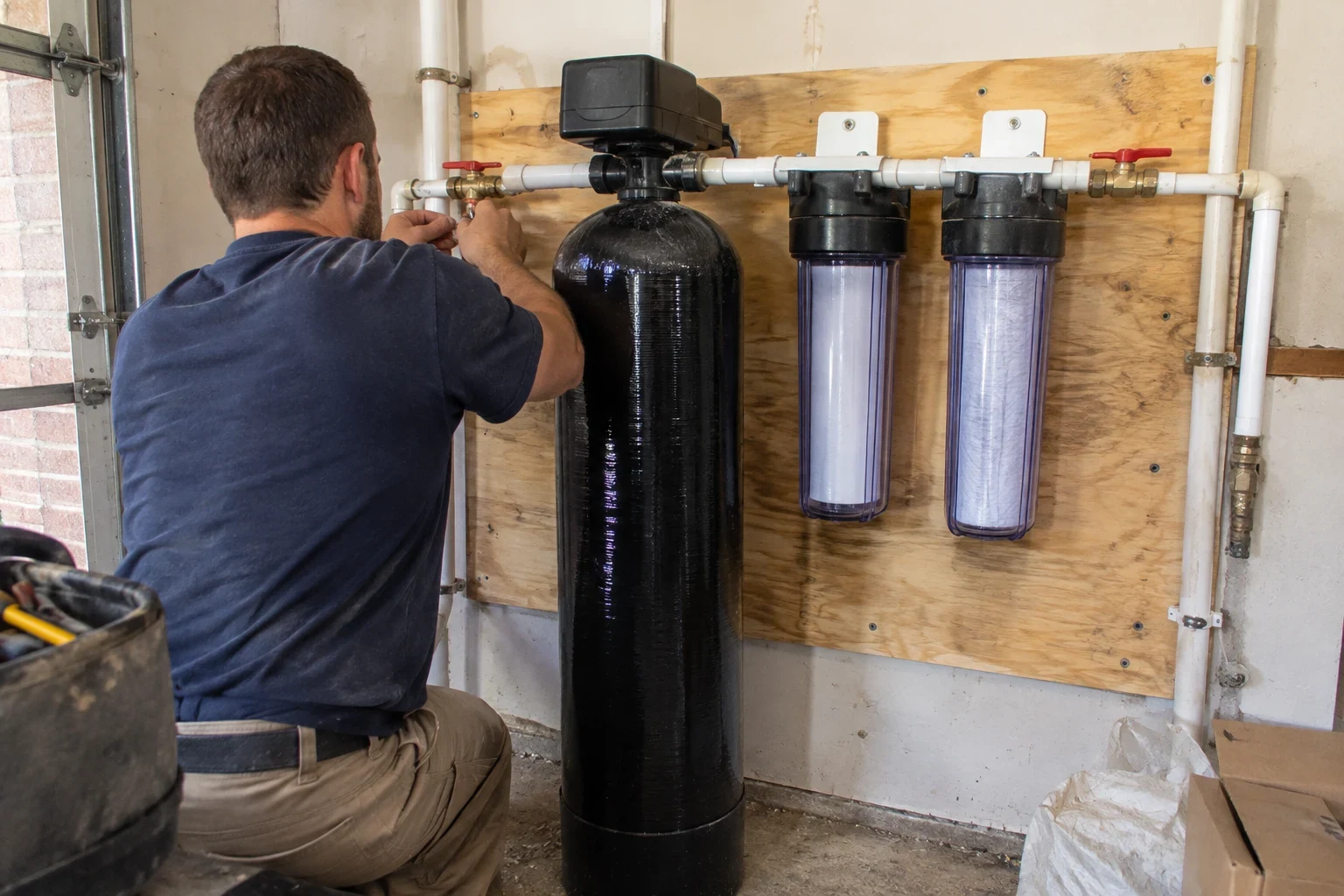
Our carbon filtration systems connect at the point where water enters your home, treating every shower, faucet and appliance for chlorine odor and sediment. We test first, match tank and valve size to your household's flow, and lay down floor protection before any plumbing is opened.
How Whole-Home Filtration Works and Who It Suits
The system is installed on your main supply line just after it comes into your home, most often in the garage or on an outside wall beside the shutoff valve. Incoming water runs through a sediment prefilter first, then through a tank of activated carbon that holds onto chlorine or chloramine and the taste and odor compounds that travel with them. From there, treated water feeds the kitchen, the baths, the laundry and the water heater.
This is the right choice when the problem shows up all over the house rather than in one glass. A swimming-pool smell in the bathroom, skin that feels tight after a shower or ice cubes with a chemical edge all point to disinfectant in the supply. White crust on faucets is a different story. That is hardness, carbon will not touch it, and a water softener or a salt-free water conditioner is the better fit.
Nothing gets recommended until your water has been tested. We walk you through the results so you know what is present, what the system will take out and what it will leave behind.
Every Installation Covers These Parts
- Testing and system sizing
- We check disinfectant level, hardness and iron, then measure your home's water pressure and peak flow. Those readings decide tank size and valve diameter, so you are not sold a stock package.
- A sediment prefilter up front
- Sand and loose pipe scale get trapped here before they can reach the carbon. That keeps the media bed working longer and spares the control valve from grit.
- The right carbon for your disinfectant
- Standard activated carbon works well on free chlorine. Chloramine calls for catalytic carbon, whose treated surface breaks apart the chlorine and ammonia, so we verify what your utility adds before we choose.
- Bypass valve and full-port fittings
- A bypass lets you route water around the system during filter service while the rest of the house keeps running. Full-port fittings keep the connection from becoming a pressure restriction.
- Protection inside and out
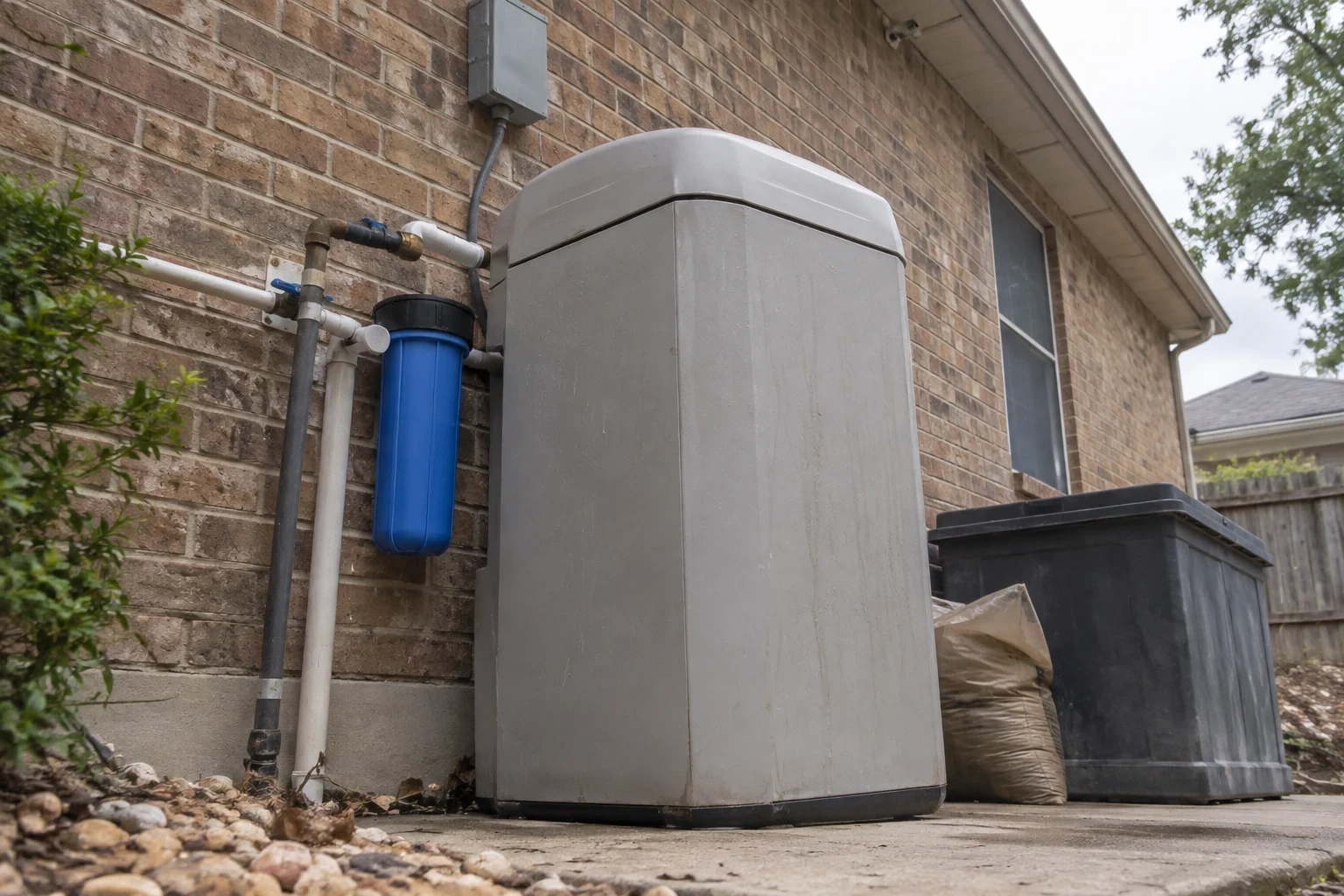
- Runners and drop cloths cover the path from your door to the work area. For outdoor installs we set a level pad and keep the tanks and drain line clear of mulch beds and plantings.
When Your Home Is Ready for Whole-Home Filtration
The bathroom smells like a pool
Hot shower water lets chlorine and chloramine escape into the steam, so the smell builds up most in the bathroom. A filter at the kitchen sink cannot reach it.
Skin and hair feel dry after bathing
Disinfectant in shower water often plays a part. Treating the main line covers every bathroom in one step.
Coffee and ice taste off
The small cartridge in a refrigerator wears out fast against treated city water. With a carbon tank upstream, it starts with water that is already clean.
Screens and shower heads clog with grit
The same sediment that plugs aerators also scores faucet and valve cartridges. A prefilter catches it before it travels through your plumbing.
How Install Day Runs
- 1
Walkthrough with you
We confirm the tank location, the drain route if the system backwashes and when the water will be off. You know the plan before we open a toolbox.
- 2
Protect, then shut off
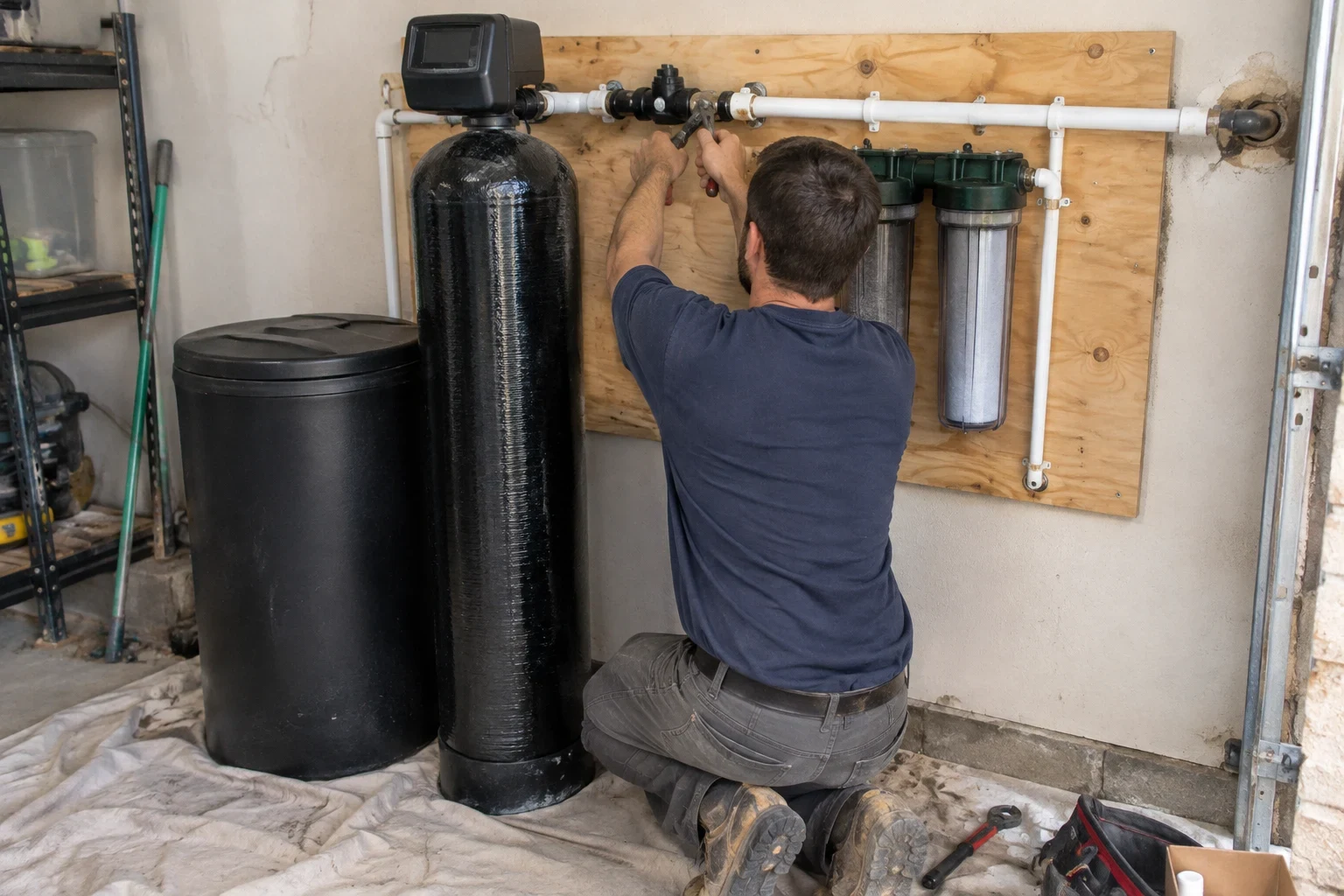
Floors get covered along the work path. We close the main, drain the line and cut in after the shutoff valve, working with your existing copper, PEX or CPVC.
- 3
Set and connect
The prefilter, carbon tank and bypass go in on a level base. We pressure-check every joint for leaks before moving on.
- 4
Flush and verify
New carbon releases fine dust, so we flush the media to drain until the water runs clear. Then we retest for disinfectant at a tap to show you the result.
- 5
Clean up and explain
We remove the old fittings and packaging, wipe down the area and walk you through the bypass and the maintenance schedule.
What Sets the Price of a Whole-Home System
Our installation is free, so the main variable between one home and the next is the equipment. After your water test we explain each line of the quote by phone, so you see what the tank, media and valve cost and why each one was chosen.
- Peak demand and bathroom count
- A home with four baths draws far more water at once than a two-bath home. Bigger tanks and a wider valve hold pressure steady when showers, the dishwasher and the washing machine overlap.
- Which carbon goes in the tank
- Catalytic carbon, needed for chloramine, costs more than standard activated carbon. Choosing the cheaper media for a chloramine supply would save money up front and leave the smell in your water.
- Backwash valve or upflow tank
- A backwashing system needs a programmable control valve and a drain connection, which adds cost. An upflow tank has neither, but it only suits water with a light sediment load.
- Where the main line can be reached
- Tying in at an open garage wall close to the shutoff takes less pipe and labor than working in a cramped utility closet or extending a run to reach the line.
Common Questions About Whole-Home Filtration
Something not covered here? (512) 710-0237
Will my water pressure drop once the system is in?
Not when it is sized properly. A pressure drop almost always comes from an undersized tank or a valve whose port is too narrow for the house. We measure your flow before choosing equipment and check the pressure again after startup.
Does a carbon system soften water?
No. Activated carbon goes after disinfectant and taste and odor compounds, while calcium and magnesium flow right past it. If the test shows hardness causing scale, we can talk about pairing the filter with a water softener or a salt-free water conditioner.
Is the filtered water ready to drink as is?
Your tap water will taste clearly cleaner, but a carbon tank is not built to remove dissolved solids or lead picked up from older faucets and solder. If those concern you, a small reverse osmosis unit with its own faucet on the kitchen counter handles the water you drink and cook with. We can test for both and tell you whether that extra step makes sense for your home.
How long will the carbon media last?
It comes down to your household's water use and the disinfectant level in the supply. A full-size carbon tank usually lasts several years, far longer than small cartridge housings. The surest sign it is used up is the chlorine smell returning, and we show you the other signs to watch.
Does the system need a drain close by?
Only a backwashing design does, since it flushes trapped sediment out of the tank from time to time. Upflow systems need no drain. We choose the design after testing and show you where the drain line would run before installing anything.
Start With the Numbers From Your Own Tap
Our water test is free. We go over each result with you and say plainly whether a whole-home system makes sense, and if it does, you get a line-by-line quote by phone.