ServicesWater Softener Installation
Water Softener Installation in Steiner Ranch
We test your water first, size the softener to the grains of hardness we actually find, and install it on your plumbing loop with drop cloths down and the drain run to code. Before we leave, you know how it works and when to add salt.
How Softening Works and Who Needs It
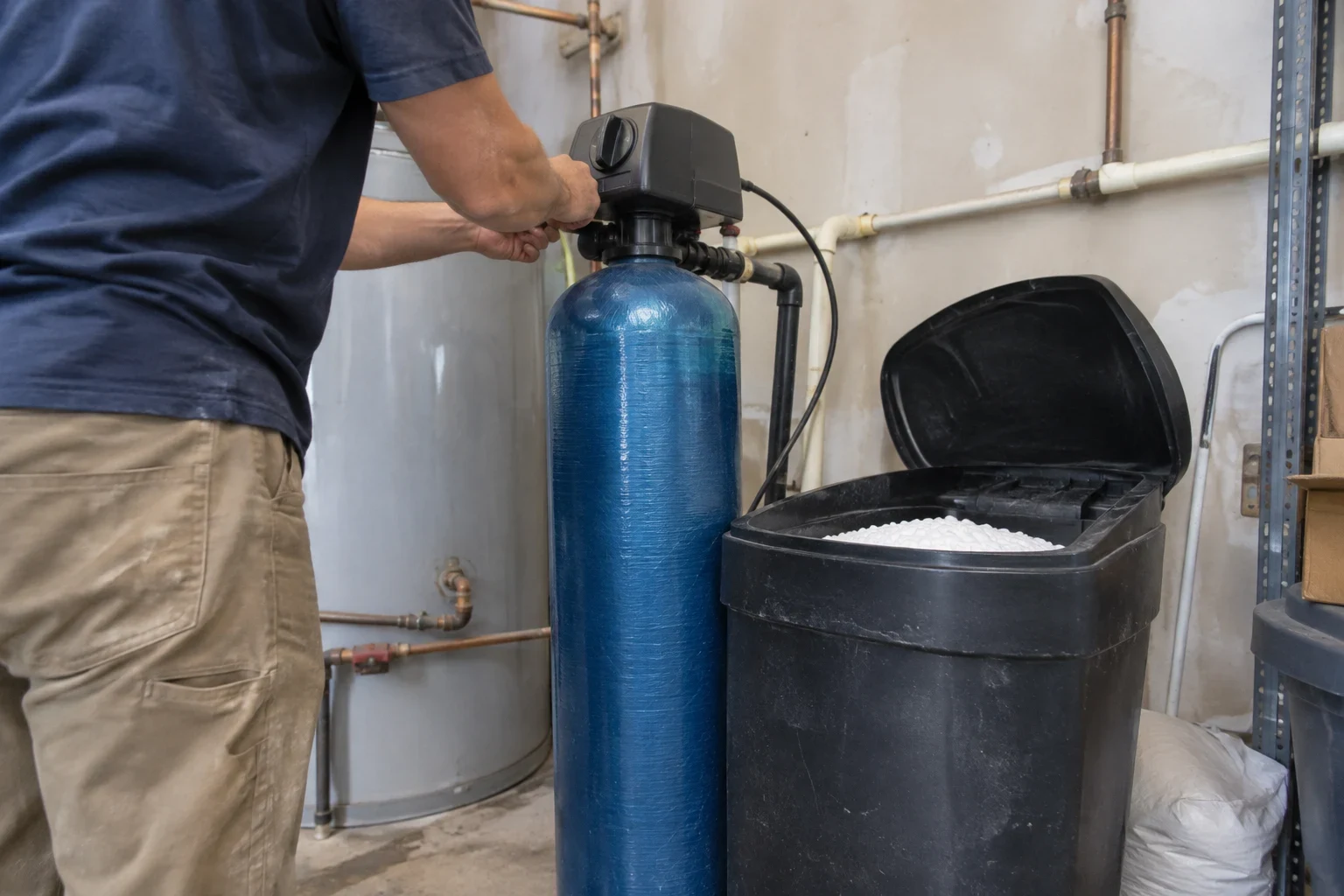
Calcium and magnesium are what leave chalky scale on faucets, shower glass and the inside of your water heater. A softener removes them through ion exchange. Inside the mineral tank sits a bed of resin beads charged with sodium. As water passes over them, the beads release sodium and hold on to the hardness minerals. When the bed is full, the control valve flushes it with brine from the salt tank, which restores the resin and sends the trapped minerals down the drain.
A softener earns its place when testing shows hardness high enough to build real scale. Water in Central Texas runs through limestone and picks up minerals, yet the amount differs between homes, so we take a reading at yours first. If the number is moderate, or you prefer not to handle salt, we will say plainly whether a salt-free water conditioner suits you better.
What Our Installation Includes
Readings for hardness and iron
We log hardness in grains per gallon and check for iron, since iron coats the resin and cuts its working life. Those readings set both the unit size and the valve settings.
Resin and brine tanks sized to fit
We match grain capacity to your hardness and your household's daily water use. Too small a tank regenerates constantly and burns salt; too large a tank leaves resin unused, and water can tunnel around it.
Connections and a bypass valve
Each softener comes with a bypass valve, so it can be taken out of service while the rest of the house keeps its water. Plenty of local homes were built with a softener loop already in place, and when yours is sound we hook up to it rather than cutting new pipe.
An air gap on the drain line
Water from each regeneration runs to a suitable drain through an air gap, which keeps wastewater from ever siphoning back into your supply. We never send brine into the yard or planting beds, since salt harms soil and plants.
Floors and garage kept protected
Drop cloths and shoe covers go on before any tool comes out. We take the packaging, cut fittings and any water drained from the lines away with us.
Settings and a walk-through
The control valve gets programmed to your hardness reading, the first bags of salt go in, and we show you the bypass, where to look at the salt level and how to read the display.
Signs Your Home Needs a Softener
Crusty white buildup on fixtures
The chalky ring at faucet bases, aerators and showerheads is calcium carbonate left as water evaporates. With hard water, it returns a few days after you scrub it off.
Spots on glass and shower doors
Glasses leave the dishwasher hazy, and shower doors cloud over even if you wipe them down after every use.
Soap that will not lather
Calcium and magnesium bind with soap into a sticky curd. You end up using extra shampoo and detergent, and skin and towels still feel coated.
Popping noises from the water heater
Sediment settles on the bottom of a tank heater and traps water underneath, which boils into steam bubbles that crackle and knock. That layer also insulates the water from the burner or element, so each heating cycle uses more energy.
An old softener that has quit
Loose resin beads in faucet screens, salt that never goes down, or a solid salt bridge across the brine tank mean it is time to replace the unit with a new system.
How the Installation Day Runs
- 1
Test and recommendation
We test your water, look over the plumbing loop, drain and outlet, and explain which size unit suits your home and the reason for it. Your quote is in hand before anything goes on the calendar.
- 2
Protect the work area
We cover the floor from the entry door to the install spot and around the loop. Everyone at home hears which faucets will be off and about how long.
- 3
Shut off, connect and pressure test
We close the main, drain the lines, set both tanks and connect the bypass, inlet and outlet. When the water comes back on, every joint gets checked under pressure for leaks.
- 4
Program and first regeneration
We set the valve for your hardness, start a manual regeneration and test the treated water to confirm it comes out soft.
- 5
Clean up and walk-through
Old parts and packaging go with us. We point out the salt level, the bypass and the display readings, and answer questions right there.
What Moves the Cost
Because installation is free, your price mostly reflects the equipment your water requires and the plumbing it connects to. After testing, we write out every part and every line of work, so nothing shows up later that you have not already seen.
- Hardness and grain capacity
- The more grains of hardness per gallon and the more people using water, the more resin the tank needs to last between regenerations. That grain capacity drives equipment cost more than anything else.
- Control valve type
- A metered, or demand-initiated, valve tracks the gallons that flow through and regenerates only when the resin is nearly exhausted, saving salt and water. A timer valve costs less up front but recharges on a set schedule regardless of how much water you used.
- Existing loop or new plumbing
- Tying into a softener loop in good shape is straightforward. If your home has no loop, or the old fittings are corroded, the added pipe and fittings appear on the quote.
- Drain and power access
- The softener needs an outlet nearby and a drain that meets code. A long drain run or a newly installed outlet means more parts and labor.
- Removing an old unit
- If a failed softener and brine tank need to be hauled away, that work gets its own line on your quote.
Water Softener Questions
Something not covered here? (512) 710-0237
Is a softener or a salt-free conditioner right for me?
A softener uses ion exchange to take calcium and magnesium out completely, so scale and spots stop and soap lathers the way it should. A salt-free conditioner alters those minerals so they stick less, but they remain in the water and some spotting can still appear. When your hardness reading is high, a softener tends to do more. When it is moderate, or you would rather avoid salt and drain discharge, a conditioner deserves a look.
Does softened water taste salty?
Generally no. The sodium added tracks the amount of hardness taken out, and at normal levels it goes unnoticed. If anyone at home is limiting sodium, a reverse osmosis system at the kitchen sink gives low-sodium water for drinking and cooking.
How often does salt need adding?
It depends on three things: the hardness we measure, how much water you use each day, and whether the valve is metered or runs on a timer. Look in the brine tank once a month and refill when the salt drops under half. A metered valve goes through clearly less salt than a timer model.
Will a softener take out chlorine or fix the taste?
No. The resin swaps out hardness minerals and does nothing for chlorine or odor. When taste bothers you, we install whole-home filtration in front of the softener, which also shields the resin from chlorine damage.
Can the new softener go in the old one's spot?
Usually it can. Before reusing the loop, drain and outlet, we confirm they are in good condition and meet code. If a fitting is corroded or the drain lacks an air gap, we tell you what the repair is and what it costs before starting.
Find Out What Your Water Actually Needs
We start with a test, not a sales pitch, and size the softener to the numbers. You will know the plan and the price before anyone sets foot in your garage with tools.