ServicesReverse Osmosis Systems
Reverse Osmosis Systems in Steiner Ranch
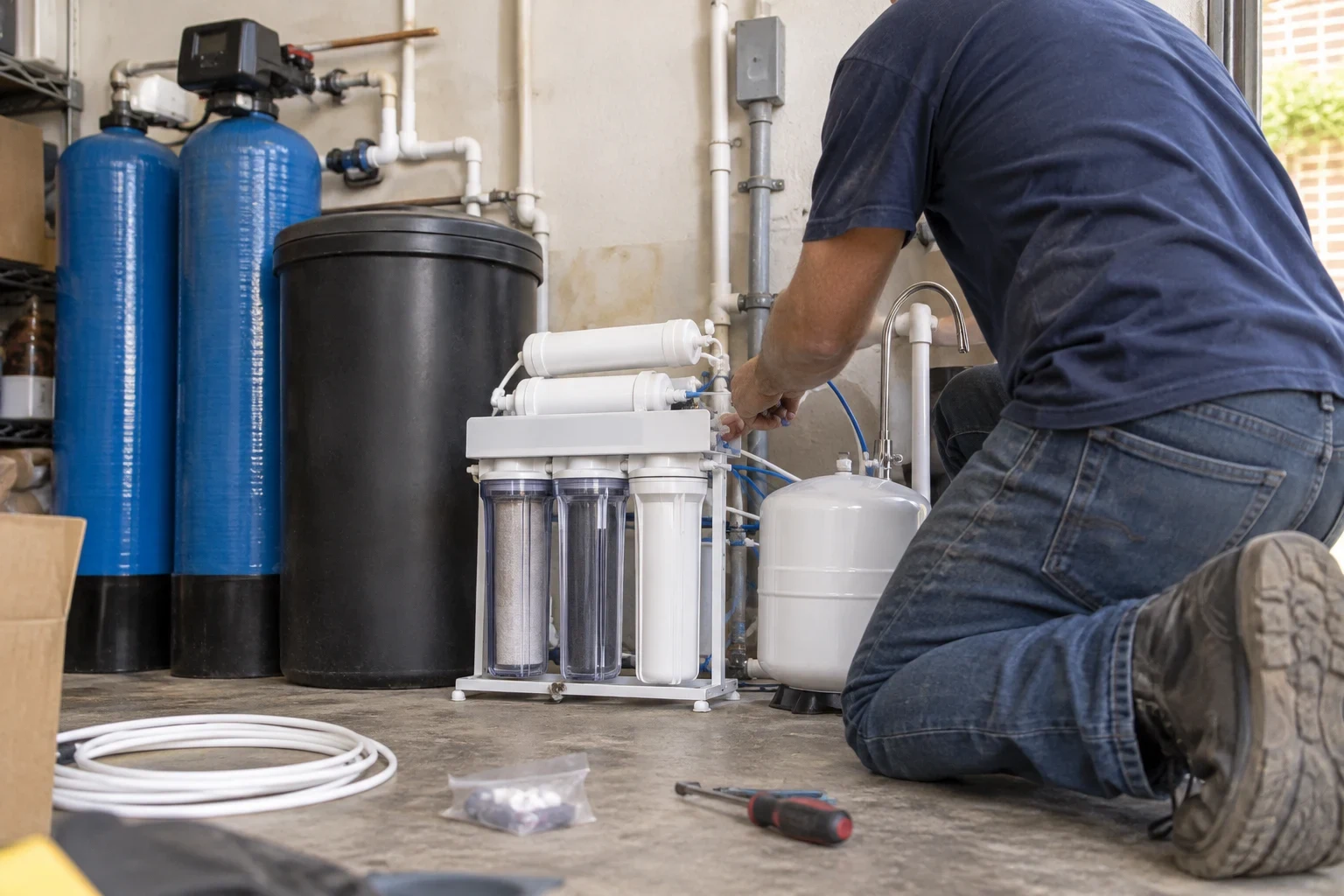
We install under-sink reverse osmosis systems that send drinking and cooking water through a sediment filter, carbon block and a thin-film membrane before it reaches its own faucet. We test your water first, protect your cabinet and floor while we work, and show you how to change every filter.
What a reverse osmosis system does at your sink
Inside an RO unit, line pressure forces water across a semi-permeable membrane whose pores are much finer than any carbon filter. Dissolved minerals, lead picked up from older fixtures, nitrates, fluoride and many trace contaminants are held back and flushed to the drain. The treated water collects in a small pressurized tank and comes out of its own faucet beside your main one.
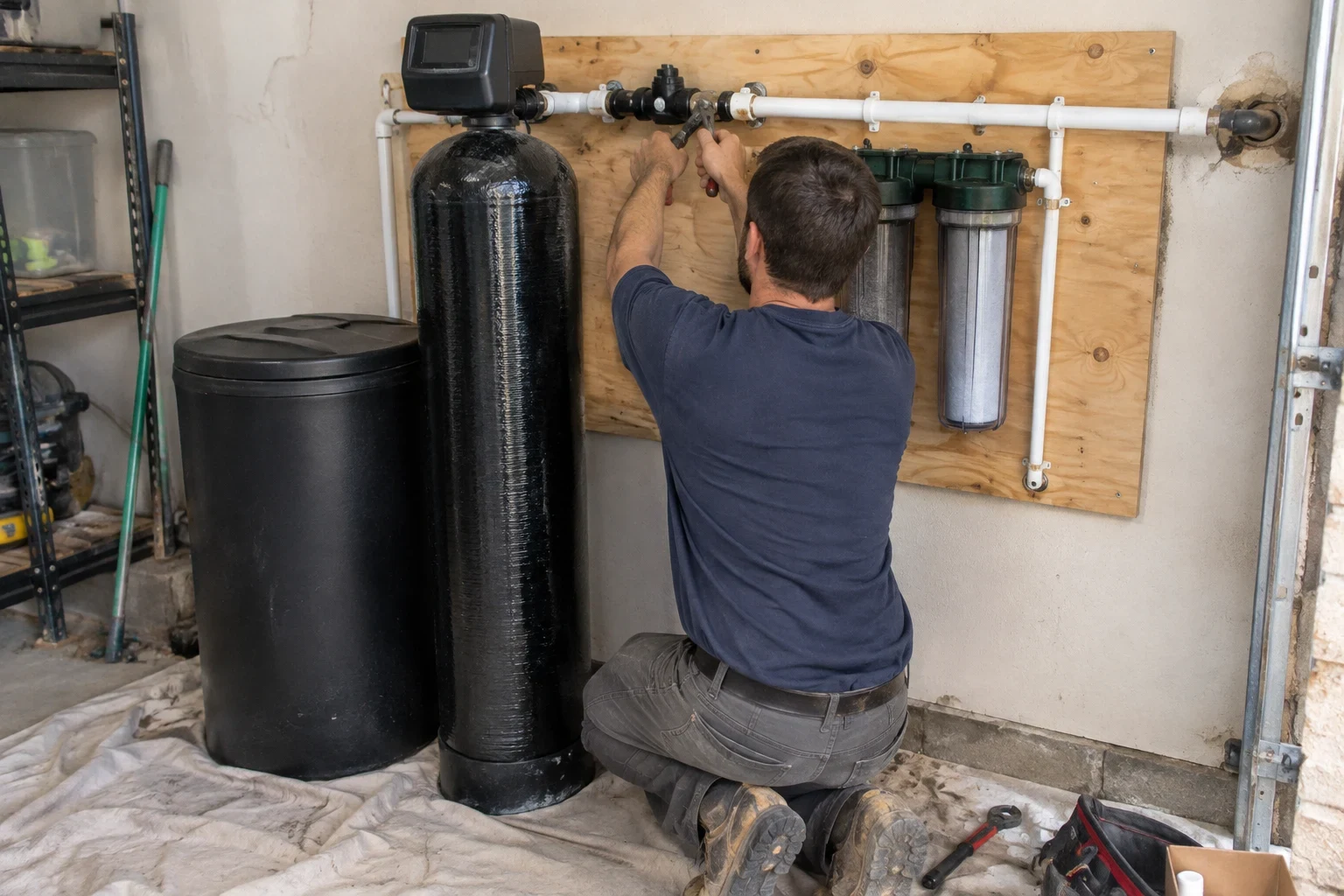
Because the unit sits under one sink, it only handles the water you drink, cook with and fill the coffee maker from. Showers, laundry and the other taps get the same water as before. If you want better water through your entire home, whole-home filtration pairs well with it. Where scale is heavy, a softener or salt-free water conditioner installed upstream keeps minerals from fouling the membrane ahead of schedule.
Every job begins with a water test so the equipment fits what is actually in your water. When the TDS and hardness numbers show a basic carbon filter is enough, we say so.
What our RO installation includes
- Water test before anything goes in
- At the kitchen faucet we read total dissolved solids, hardness and chlorine. The results set the prefilter arrangement and show how much load the membrane will carry.
- Filter stages in order
- Grit is trapped by a sediment prefilter. A carbon block follows to take out chlorine, which would otherwise degrade the thin-film composite membrane. After the storage tank, a post-carbon filter finishes the taste.
- Tank, shutoff and check valve
- Before filling, we check the bladder tank's air precharge with a gauge. An automatic shutoff valve paired with a check valve halts drain flow once the tank is full, so less water is wasted.
- Faucet and drain connection
- An unused sprayer or soap hole becomes the faucet mount when your sink has one; otherwise we drill a clean hole to size. The drain saddle clamps to the tailpiece above the P-trap, where it cannot siphon.
- Fridge or ice maker line, if wanted
- For filtered ice and fridge water, we run a separate tubing line to the refrigerator with a shutoff valve of its own.
- Free installation
- Installation is free. After the water test we give you the system quote by phone, with the equipment and each add-on itemized.
When reverse osmosis is worth a look
Cases of bottled water in the pantry
A dedicated RO faucet delivers low-TDS water much like bottled, minus the weekly haul and the recycling bin full of plastic.
Crust in the kettle or coffee maker
That white buildup is calcium and magnesium left behind as water heats. The membrane takes most of those minerals out of the water you brew and cook with.
Water tastes of chlorine or chalk
The carbon stages remove chlorine, and the membrane pulls out the dissolved solids behind a salty or chalky aftertaste.
Older fixtures or plumbing
Lead usually enters from brass faucets and old solder rather than from the supply. RO membranes are rated for lead reduction right at the tap you drink from.
Cloudy glasses after a rinse
Hazy, spotted glassware often points to high TDS, which also means you will see a clear difference once the membrane is in.
How install day runs
- 1
Clear and protect
We lay a drop cloth on the floor in front of the sink, move your under-sink items into a bin you can find later, and line the cabinet base with a waterproof mat. Shoe covers go on at the door.
- 2
Mount and connect
We fit a feed valve on the cold supply, mount the filter housing on the cabinet wall, set the tank, and install the faucet and drain saddle. Countertop drilling is done with a cup to catch dust.
- 3
Flush and pressure check
New carbon and membranes release fine particles and preservative, so we flush the first tanks to drain. We check every fitting for drips with a dry towel and compare TDS before and after the membrane.
- 4
Walkthrough and cleanup
Before we leave, we show whoever is home how to shut the feed valve, swap the prefilters and read the tank. Your items go back in a dry cabinet and we take all packaging with us.
Where the cost of an under-sink RO unit comes from
Your quote mostly reflects the equipment your water test points to and the amount of fitting your kitchen calls for. We give you that figure by phone once the test is done, so every part is accounted for before any work begins.
- Membrane output and extra stages
- A basic four- or five-stage unit costs less than one with a remineralization cartridge or a higher gallon-per-day membrane sized for a larger household.
- Tank versus tankless
- We install two options. A tankless RO unit delivers 800 gallons per day through 7 stages down to 0.0001 micron, pours faster and frees cabinet space, but costs more. A lower-price 5-stage tank system under the sink runs sediment, GAC, carbon block, RO membrane and post carbon, with fewer parts to keep up.
- Mineral load in your water
- When TDS or hardness runs high, the membrane may need protection from a permeate pump or pretreatment ahead of the unit. Those added components raise the total.
- Counter and add-on lines
- Stone counters with no spare opening take slower, careful drilling. Running a line to the fridge or ice maker adds tubing and its own valve.
Reverse osmosis questions we hear at the sink
Something not covered here? (512) 710-0237
Does an RO system waste water?
A share of the water always runs to drain, since that flow carries rejected minerals off the membrane surface. The amount depends on the membrane, the pressure in your lines and how mineral-heavy your water is. Pairing the right membrane with a permeate pump can cut that share noticeably, and your water test shows which setup makes sense.
Will RO water taste flat to us?
Most people describe it as clean and light, though some find it a bit too plain. A remineralization cartridge after the tank adds back a small amount of calcium and magnesium for flavor. We can fit one on install day or add it later.
How often do the filters need changing?
Sediment and carbon prefilters usually need replacing every six to twelve months, depending on how much water you use and its quality. If the prefilters stay current, the membrane generally lasts two to three years. We walk you through the swap before we leave so you can do it on your own.
Do I need a softener in front of the RO unit?
Not always. Hard water builds scale on the membrane and wears it out sooner, so a water softener or salt-free conditioner upstream can extend its life. Your test results answer this, so you only buy equipment your water actually calls for.
Do you have to drill my countertop?
Only if there is no spare sprayer hole, soap dispenser opening or other usable spot. On granite or quartz we use a water-cooled diamond bit and capture the slurry as we go, so it stays off your floor and out of the cabinet.
Start with a look at your water
We test at your kitchen sink, walk you through the readings and give you a straight answer on whether RO fits. We work across Steiner Ranch and nearby Lakeway and Bee Cave.