ServicesWater Testing & Analysis
Water Testing & Analysis in Steiner Ranch
A softener, carbon filter or reverse osmosis unit is only as useful as the numbers behind it. We sample water from your own faucet, record each result on a sheet you keep, and tell you plainly which readings call for treatment and which can be left alone.
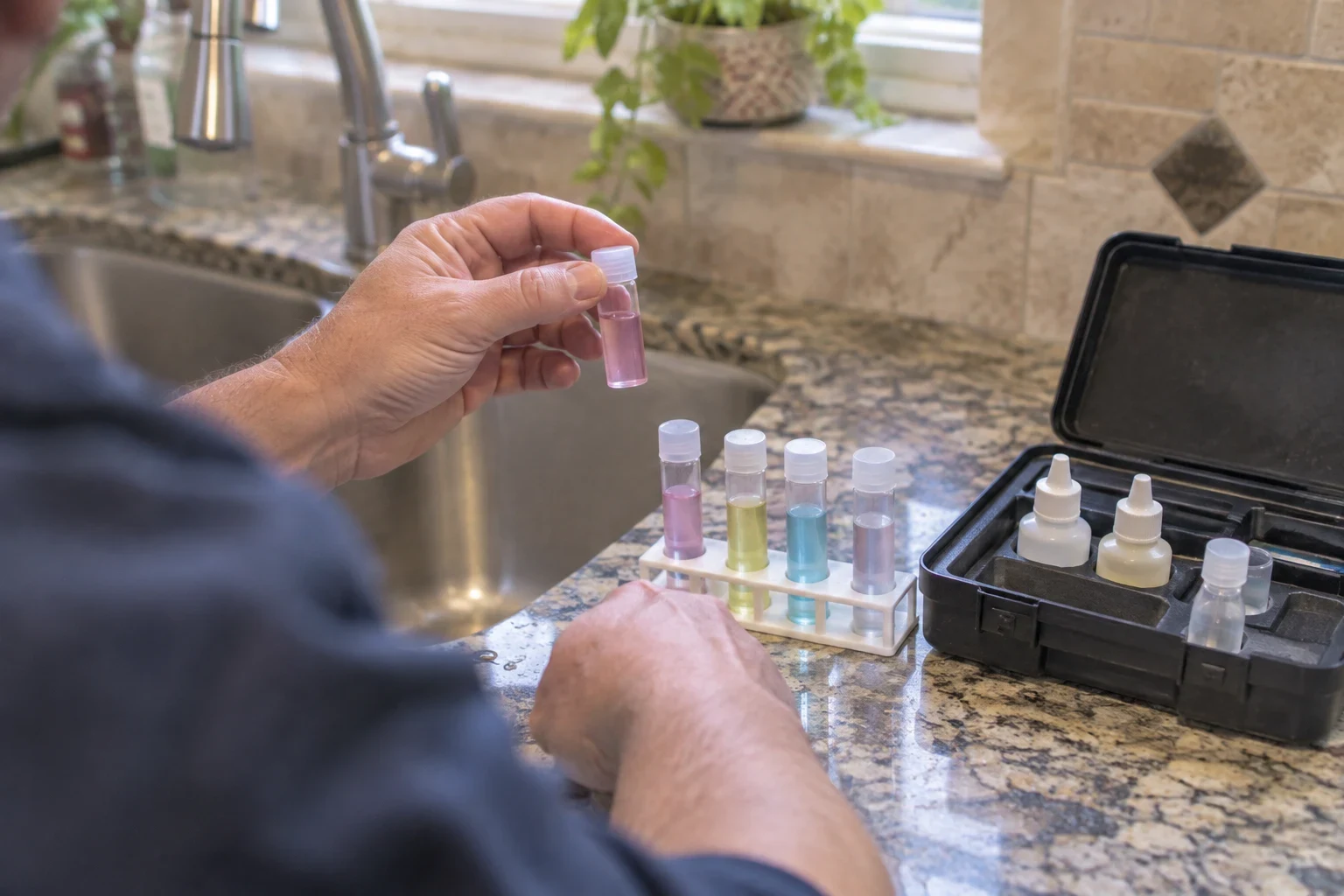
Numbers first, equipment second
Most water treatment mistakes start with a guess. Someone sees white crust on a faucet and buys a softener sized for water twice as hard as theirs, or installs a sediment filter when the real complaint is chlorine taste. A water test replaces the guess with measured values: grains per gallon of hardness, parts per million of dissolved solids, the disinfectant residual and the pH that decides how your pipes and fixtures age.
Central Texas water runs through limestone, so calcium and magnesium hardness is the usual suspect around Steiner Ranch, Lakeway and Bee Cave. Usual is not the same as measured, though. Hardness, chlorine levels and dissolved solids vary by supply and by season, and the reading at your kitchen tap is the one that should drive any decision.
We treat the test as useful on its own. Plenty of households learn their water is fine for what they care about, and we say so. When a system does make sense, the results tell us which type and what size, so you are not paying for capacity you will never use.
What the test covers
- 01
Hardness, measured as a number
A drop-count titration shows how much calcium and magnesium your water carries, reported in grains per gallon. That figure decides whether a water softener, a salt-free water conditioner or no equipment at all fits your home, and it sets resin capacity if softening makes sense.
- 02
Disinfectant type and residual
Some utilities use free chlorine and others use chloramine. The distinction matters because chloramine slips through ordinary carbon far more easily, so a whole-home filter for it needs catalytic carbon and a longer contact time.
- 03
Dissolved solids and pH
A TDS meter shows the total mineral load, the baseline any reverse osmosis system gets measured against. pH shows whether the water tends to eat at copper lines or leave scale in the water heater.
- 04
Iron and manganese
Small amounts are enough to leave orange or black marks on porcelain and clothing. We check for both, since they call for different treatment than hardness and a softener alone usually handles them poorly.
- 05
Fixtures and visible plumbing
We look at aerators, showerheads and the water heater drain for buildup or sediment, and note the pipe material where we can see it. Those clues often back up what the kit shows.
- 06
A result sheet that stays with you
Each reading is written next to its normal range. The sheet is yours whether or not you ever buy equipment from us.
Questions about Water Testing & Analysis?
Call(512) 710-0237When a water test is worth scheduling
Chalky film on fixtures and glassware
Cloudy rings on shower glass and spotted dishes usually mean hardness. Measuring it tells you how much, and the amount is what decides the fix.
Water that tastes like a swimming pool
A strong disinfectant flavor means a noticeable residual. Knowing whether it comes from chlorine or chloramine keeps you from buying a filter that cannot take it out.
Marks on sinks, tubs or clothes
Rusty or dark streaks point toward iron or manganese. Those need a different approach than scale, so we confirm the cause before suggesting iron and sulfur removal.
Popping or rumbling from the water heater
Mineral scale collecting at the bottom of the tank traps heat and makes that sound. A hardness reading shows whether the buildup will keep coming back.
An equipment quote with no measurements
If someone priced a system without testing anything, get your own readings first. Measured values are the simplest guard against being oversold.
How the visit runs
- 1
A short call to set the time
When you phone, we ask what is bothering you about the water and where it shows up. That tells us which tests to bring and how long to plan for.
- 2
We arrive and protect the work area
We wear shoe covers inside and lay a mat under the sink cabinet before opening it. Samples come from the kitchen tap and, if needed, a bathroom tap or the hose bib, with nothing set on your counters or floors without a towel under it.
- 3
Testing at the tap
Most readings are done on the spot so you can watch the color change on the hardness titration and see the meter readings yourself. We run cold water for a set time first so the sample reflects the supply and not water that sat in the pipes.
- 4
We walk you through the results
Before we leave, we go over each number in plain terms and tell you what, if anything, it calls for. If the honest answer is that your water does not need treatment, that is what you hear.
What the test costs and what affects next steps
The in-home water test is free, and there is no obligation attached to it. Costs only come into the picture if the results point to equipment, and then the readings themselves shape the quote you get by phone or at the table. Here is what moves that number.
- Hardness and dissolved solids
- Higher grains per gallon mean a larger softener resin bed or a different conditioner design. Very high TDS can shorten reverse osmosis membrane life, which affects long-term upkeep.
- Chloramine versus chlorine
- Chloramine needs catalytic carbon and a larger media tank to reach the contact time it requires. Free chlorine can usually be handled with standard carbon.
- More than one problem
- Iron plus hardness, or taste plus staining, may take two stages of treatment instead of one. We explain whether a combined system or separate units makes more sense for your readings.
- Where the equipment would go
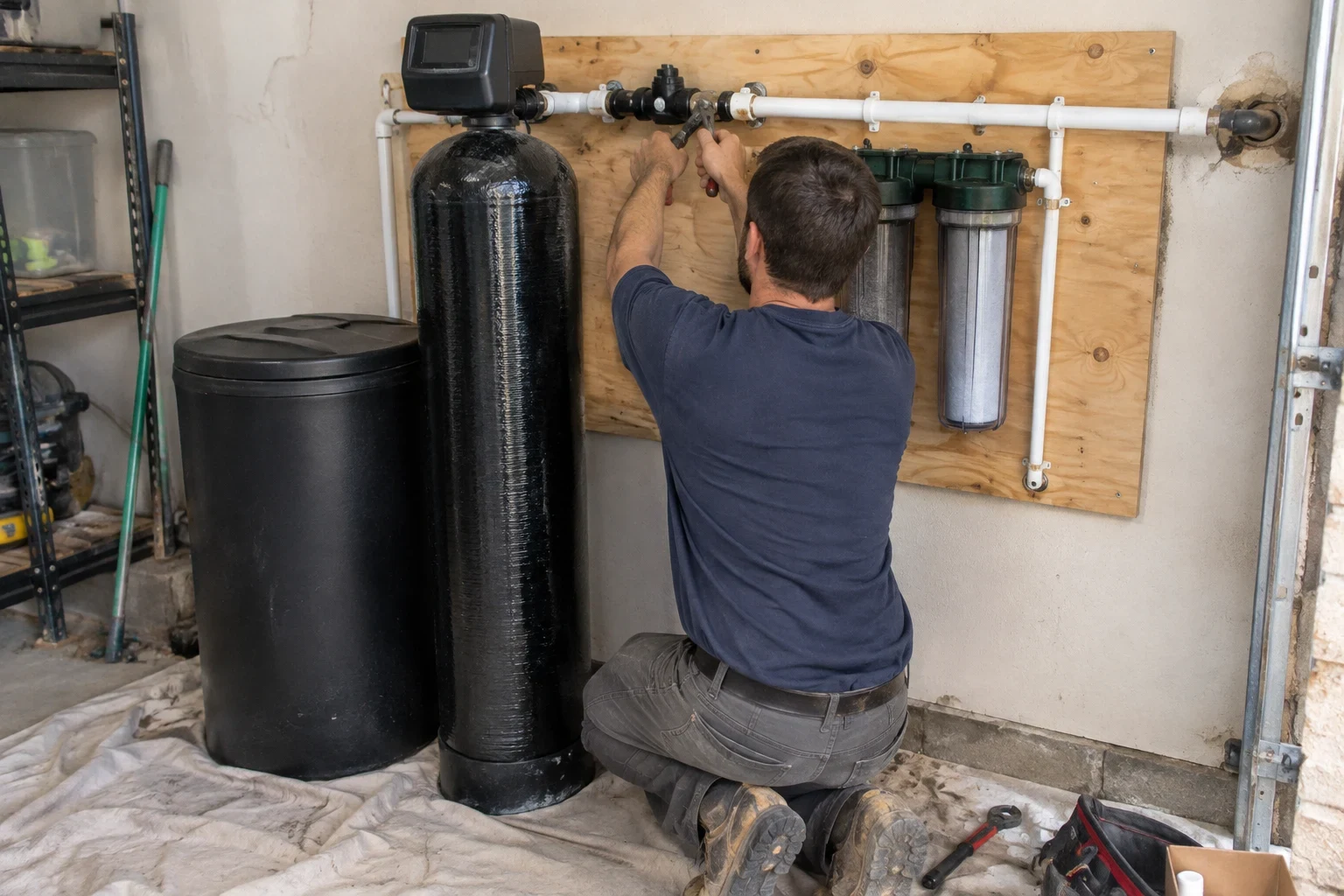
- Garage installs near the main line are simpler than tight utility closets. Our free installation offer covers the setup, so the quote reflects the equipment the test says you need.
Questions about water testing
Is the water test really free?
Yes. The visit, the readings and the written sheet cost you nothing. Buying equipment afterward is entirely your choice, and plenty of people simply keep the results for reference.
How much time should I set aside?
Plan on less than an hour, and that includes going over the numbers together at the table. If you have more than one complaint, such as stains in a guest bath and an off taste at the kitchen faucet, we pull samples from each spot, which adds a few minutes.
My utility says the water meets standards. Why test?
Utility reports describe water as it leaves the treatment plant, before it travels through your service line and household pipes. Compliance also says nothing about hardness, scale or taste, which are what most people notice day to day. A sample from your own faucet answers those questions for your home.
Can you check for lead or other trace contaminants?
The in-home kit measures hardness, disinfectant residual, TDS, pH, iron and manganese. Lead and most trace contaminants can only be measured reliably by an outside laboratory with the right instruments. If older plumbing or another specific worry is on your mind, we explain that plainly and walk you through how a lab sample is taken.
Will you try to sell me a system?
No. We go through each reading and tell you whether it calls for treatment. When your water is fine for what matters to you, that is the answer you get, and the sheet stays with you.
Get real readings before you buy anything
A single visit puts measured values in your hands, along with a plain account of what each one means for your home. We cover the floor where we work, tell you what we are doing as we go and leave the result sheet behind.