ServicesSalt-Free Water Conditioners
Salt-Free Water Conditioners in Steiner Ranch
A salt-free conditioner changes how calcium behaves so it stops bonding as hard scale inside your water heater, faucets and shower heads. There are no salt bags to carry, no brine discharge and no drain connection. Every job begins with a test of your water and a plain answer on whether this system suits it.
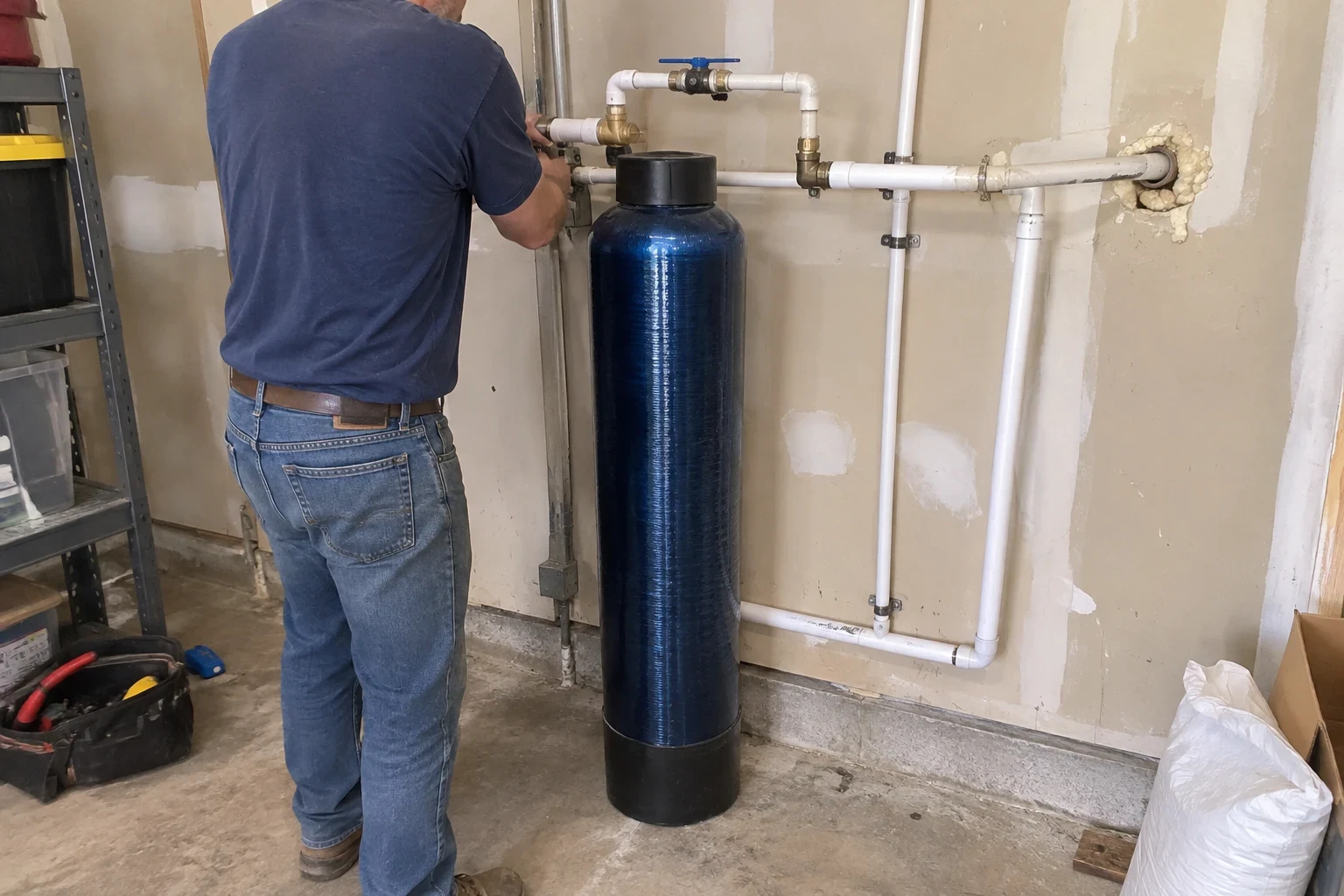
How a Salt-Free Conditioner Works
Most salt-free units use template-assisted crystallization, or TAC. Water passes through a tank of ceramic-coated beads. The bead surface pulls dissolved calcium and magnesium into microscopic crystals that stay suspended in the water instead of bonding to metal and glass. The minerals are still there. They just lose their grip on heating elements, cartridge valves and pipe walls.
That distinction matters. A conditioner is not a softener. You will still see some spotting on glass shower doors, and soap lathers about the same as before. What you get is far less hard scale inside the water heater and on aerators, which is where scale costs money. If slick, soft-feeling water is the goal, our water softener installation page covers the salt-based option.
Central Texas water often carries a good load of calcium from limestone, so scale is a real question for many homes here. The honest answer depends on your own hardness number, which is why every job starts with a test.
What the Installation Includes
Hardness and chemistry check
We measure hardness, iron, chlorine and pH before recommending a unit. TAC media has limits, and a reading outside them changes the plan.
Sediment and carbon pre-filtration
Chlorine, iron and fine sediment can coat TAC beads and shorten their working life. Most installs pair the conditioner with a sediment cartridge and carbon stage ahead of it, sized to your flow rate.
Main-line tie-in with a bypass
We cut into the main supply where it enters your home and add a three-valve bypass. That lets you isolate the system for media changes without shutting off the house.
Floor and landscape protection
Runners go down along the route from your door to the garage or utility area before a single tool is carried through, and the tank sits on a rubber mat. If the tie-in is on an exterior wall, we lay a tarp for fittings and tools so nothing lands in your flower beds or mulch.
Startup and walk-through
We flush the lines, check every joint under pressure and show you the bypass valves and the filter housing. You will know what to change and roughly when.
Signs a Conditioner May Be Worth It
White crust on faucets and shower heads
Chalky buildup on aerators and spray nozzles is calcium carbonate. It returns within weeks of cleaning when hardness is moderate to high.
A popping or rumbling water heater
Flakes of scale settle on the bottom of a tank heater and trap small pockets of water beneath them. When the heater fires, those pockets flash to steam, which makes the crackling sound. The same layer insulates the water from the gas flame or electric element, so every heating cycle stretches out and burns more energy.
Short life from cartridges and valves
Toilet fill valves, mixing cartridges and dishwasher inlet screens that stick or fail early are often scaled up rather than worn out.
You want scale control without salt
Some households do not want to haul salt, run a drain line or add sodium to the water. A conditioner avoids all of that.
How the Day Goes
- 1
Free water test and recommendation
We test at your tap and talk through the numbers. If a conditioner is a poor fit, we say so and explain what would work better.
- 2
Confirm the location
We pick a spot near the main line, usually the garage, with room for the tanks and access for future media changes. You hear the plan before any pipe is cut.
- 3
Protect, shut off, install
Floors get covered, the main is shut off and we let everyone in the house know how long water will be out. Most installs take a few hours.
- 4
Pressure test and cleanup
We restore water, purge air, check for drips at every fitting and haul away packaging and pipe offcuts. The work area is left as we found it.
What Moves the Price
Installation is free, so the cost mostly comes down to the equipment your water calls for. We give you the price by phone or at the test, item by item, before anything is ordered.
- Household flow rate
- Tank size follows peak demand. More bathrooms running at once means a larger media tank so water moves through slowly enough for crystallization to work.
- Pre-filtration needs
- Water with noticeable chlorine or iron needs a carbon or iron stage in front of the conditioner. Clean, low-chlorine water may need only a sediment cartridge.
- Plumbing at the main
- Copper, PEX and CPVC each take different fittings. A tight or awkward location can add parts or relocation work.
- Media replacement schedule
- TAC beads wear out over a few years depending on water use and chemistry. We explain the expected interval so the long-term cost is clear from the start.
Salt-Free Conditioner Questions
Something not covered here? (512) 710-0237
Will my water feel softer after a conditioner goes in?
It won't. Calcium and magnesium stay dissolved, so the water feels and lathers about the same as it does today. What changes is how much hard scale forms on heating elements, fixtures and pipe walls. If slick, soft water is what you want, a salt-based softener is the better tool.
Does it need electricity or a drain?
Most TAC units need neither. There is no regeneration cycle, so there is no backwash to drain and no control head to plug in. That gives more freedom in where the tanks go.
How often does it need service?
The sediment and carbon pre-filters are usually changed on a set schedule tied to water use. The TAC media lasts considerably longer, typically a few years. We tell you both intervals at startup based on your test results.
Will it remove chlorine or other contaminants?
The conditioner itself does not. Chlorine removal comes from a carbon stage, which we often install ahead of it. For drinking water, a reverse osmosis system at the kitchen sink is the usual next step.
Can it fix the scale already in my water heater?
Some existing scale may loosen slowly over time, but the conditioner is mainly preventive. If your heater is already crackling, flushing the tank is a good idea before or after install.
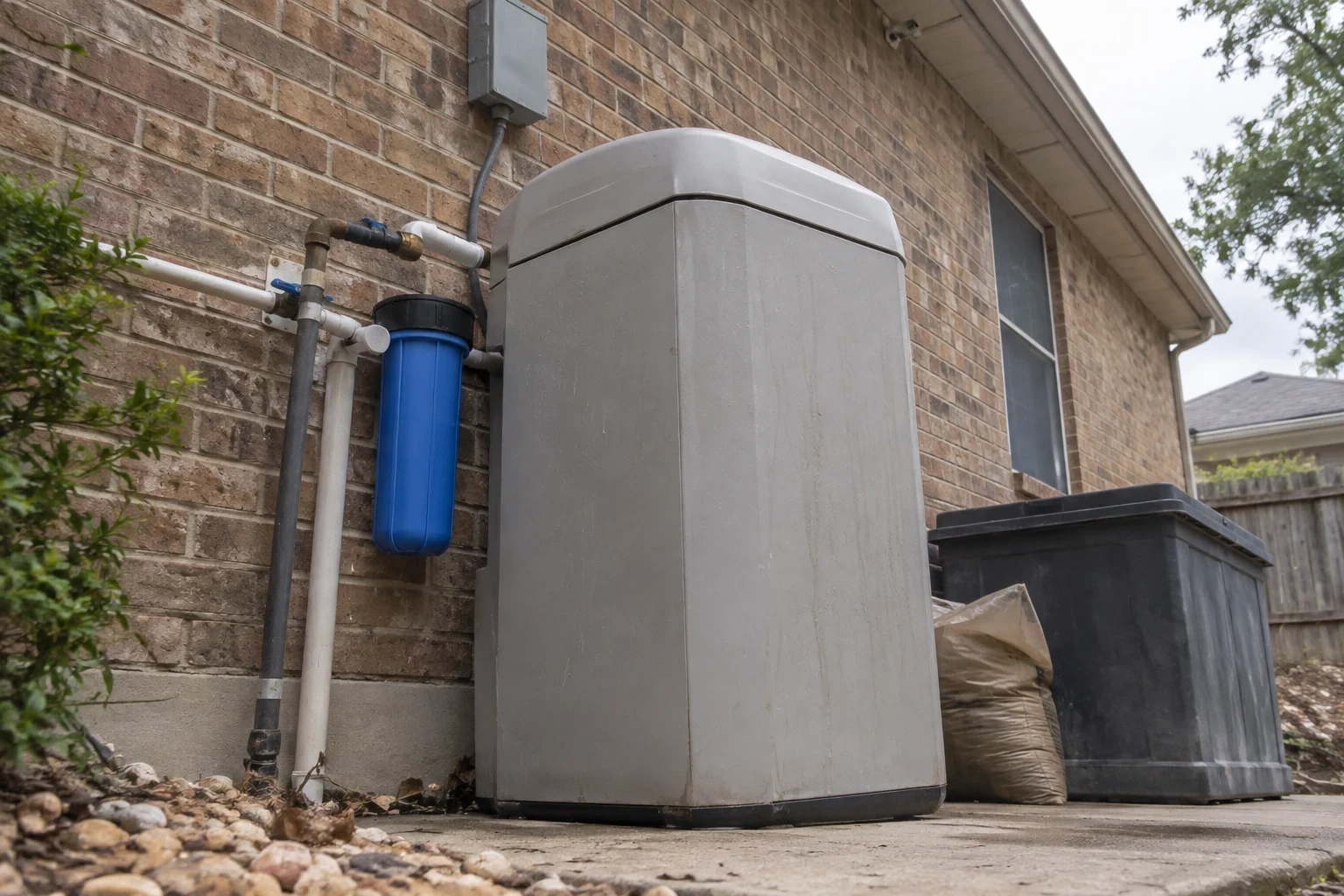
Learn What Your Water Calls For
Once we have your hardness reading, we know whether a conditioner can work alone or needs a pre-filter in front of it. You get a straight recommendation and a written, itemized price before anything goes on the calendar.