ServicesIron and Sulfur Removal
Iron and Sulfur Removal in Steiner Ranch
Orange rings in the toilet, brown spots on laundry or a rotten-egg smell from the tap all have a cause we can measure. We test your water, find where the iron or sulfur enters, and install equipment that removes it without tracking mess through your home.
What iron and sulfur removal actually does
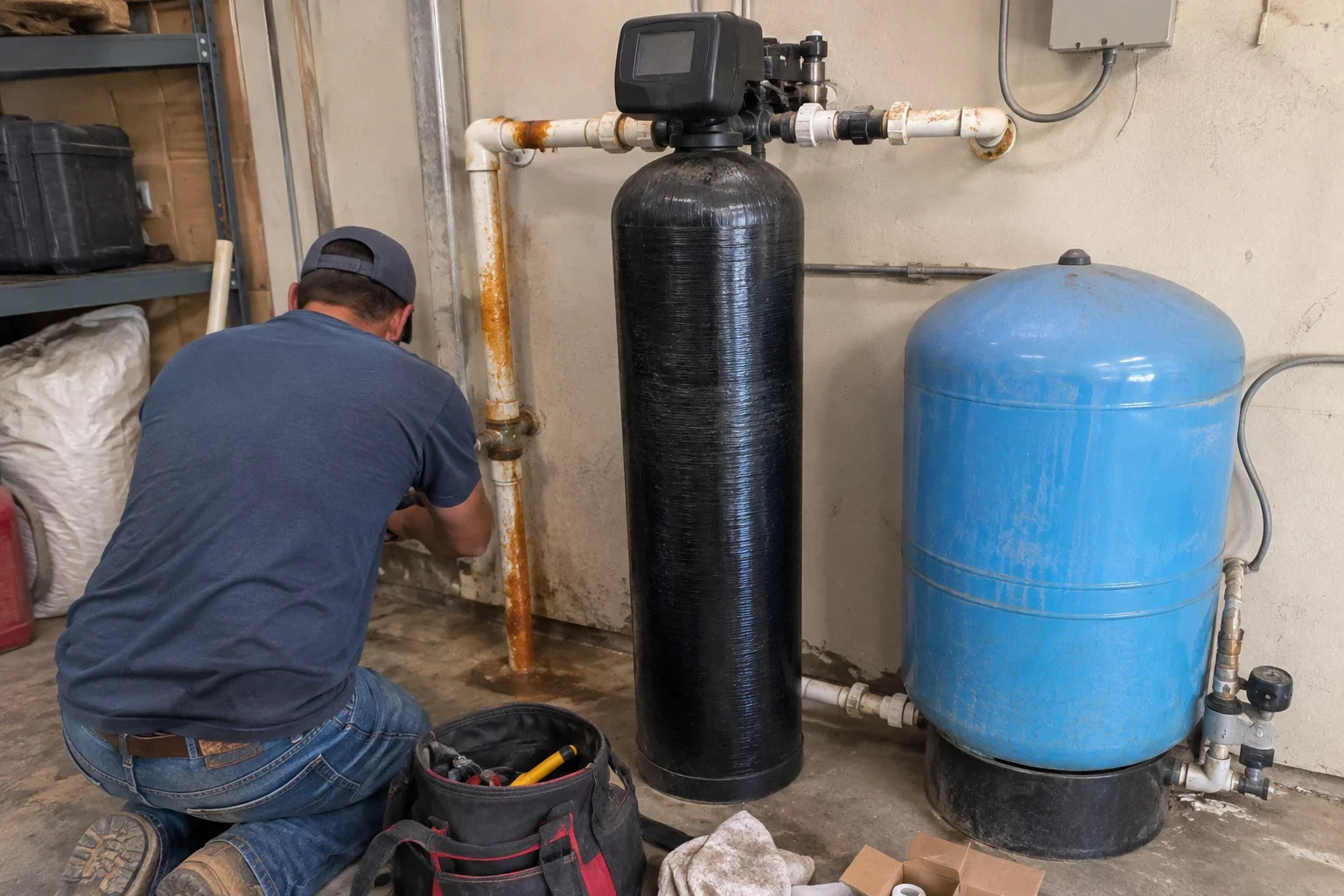
Dissolved iron arrives clear. Once it meets air or chlorine, it oxidizes from ferrous to ferric iron and turns into the rust-colored particles that stain fixtures and laundry. Hydrogen sulfide is a gas dissolved in water, and even small amounts produce the sulfur smell people notice first in the shower. Removal handles both the same way: force the oxidation to happen inside a filter tank, let the media hold the solid particles, and send them out to the drain each time the system backwashes.
The source matters as much as the filter. Sometimes the iron comes from corroding galvanized pipe in your home, not the supply. Sometimes the odor is only on the hot side, created inside the water heater by a magnesium anode rod reacting with sulfate. In those cases a large filter is the wrong answer, and we will tell you so.
We keep you informed at each step: what we found, what we recommend and why, and what the crew will touch on install day.
What the work includes
- 01
Hot and cold side checks
We smell and sample each side on its own. Odor in the hot water only points to the heater, while odor on both sides points to the incoming supply.
- 02
Lab-style readings
We measure iron, manganese, hydrogen sulfide and pH. pH matters because media like Birm need water above roughly neutral to oxidize iron well.
- 03
Matched treatment equipment
Your readings decide the equipment. It could be an oxidizing filter with air injection, catalytic carbon, manganese greensand, or a peroxide feed when sulfur is heavy. We size each one to your peak flow so pressure holds with two showers running.
- 04
Bypass valve and drain line
Every system gets a bypass so water stays on during service, plus a proper air gap on the backwash drain. We route that drain so it does not dump iron-laden water onto beds or turf.
- 05
Anode rod replacement when needed
If the heater is the culprit, we swap the magnesium anode for an aluminum-zinc or powered anode. It is a small job that often solves the whole complaint.
Questions about Iron and Sulfur Removal?
Call(512) 710-0237Signs your water carries iron or sulfur
Orange or brown staining
Rust-colored rings in toilets, tubs and sinks, or streaks under faucets, are oxidized iron settling out.
Rotten-egg smell
A sulfur odor when you run the tap is hydrogen sulfide. You can often smell it at levels far below what a lab flags as high.
Dingy or spotted laundry
White fabric turning yellow or tan, especially after bleach, which oxidizes iron right in the wash.
Black specks or stains
Dark residue on fixtures can be manganese or iron sulfide, which forms when iron and sulfur are both present.
Metallic taste in coffee or tea
Iron reacts with tannins and changes both color and flavor.
How a job runs
- 1
Free water test
We visit, sample the hot and cold sides and walk you through the readings at your kitchen counter. You get a plain answer on what is causing the problem.
- 2
Written recommendation
We explain the equipment, where it would sit, how it backwashes and what it costs. We recommend only the new system your test results support.
- 3
Protected install day
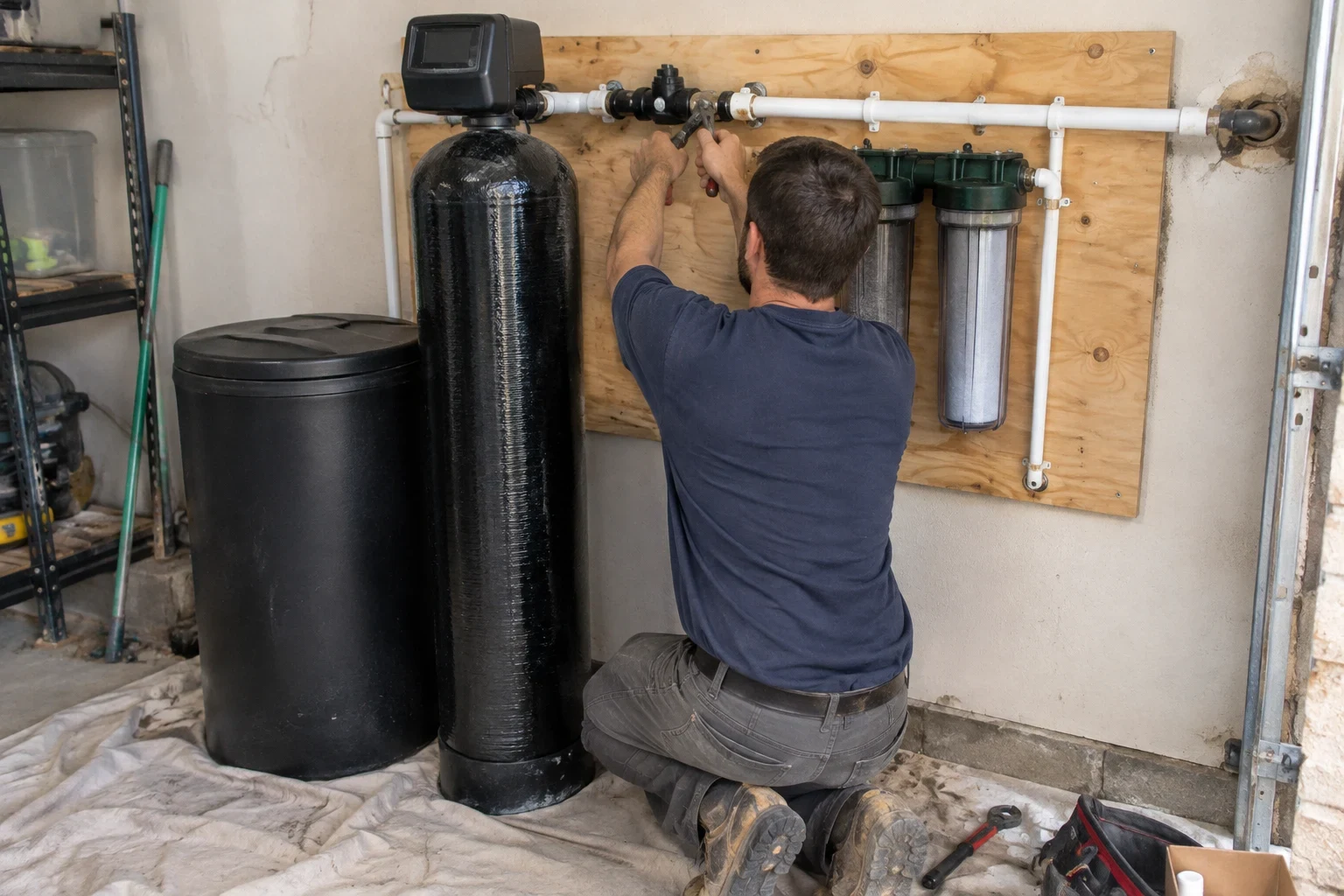
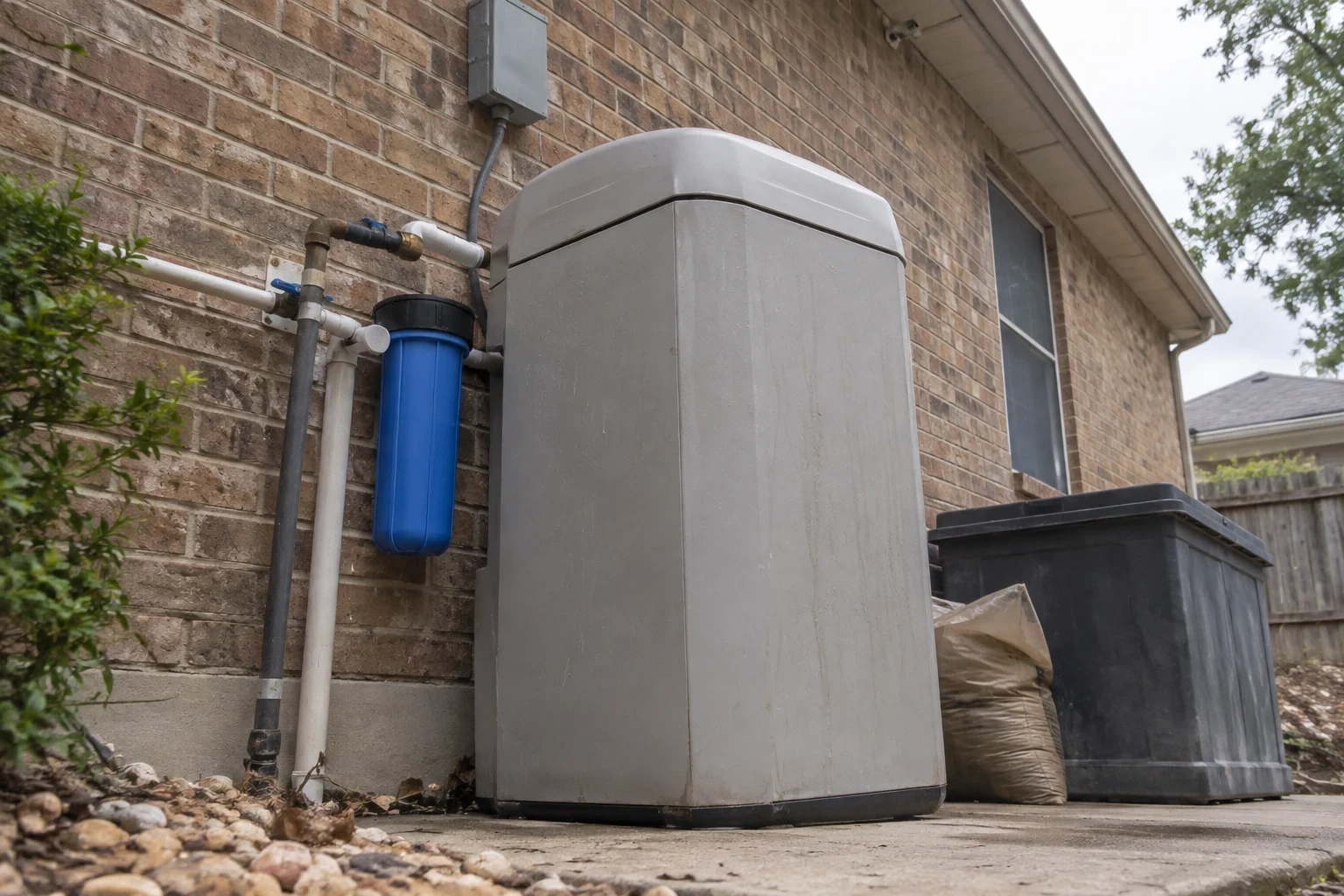
Before tools come in, we lay runners along the path from your entry to the equipment spot and spread cloths across the floor near the main line. Outside, the tank sits on a level pad, and tools and spoil stay off your beds and turf.
- 4
Startup and handoff
We flush the media, set the backwash for overnight hours, retest the water and show you the bypass valve. Before leaving, we roll up the runners, wipe down the work area and haul away every box and pipe offcut.
What moves the price
Most of the price comes down to two readings: the concentration of iron and hydrogen sulfide in your supply, and the peak flow your home demands when several fixtures run together. Because we offer free installation, your quote is mostly about the equipment and media. You see your test results before you commit to anything.
- Contaminant levels
- Low iron with a faint odor can often be handled by catalytic carbon alone. Strong sulfur readings may call for air injection or a peroxide feed paired with a contact tank.
- Peak flow and home size
- Each added bathroom raises the amount of water your home can pull at once. To hold pressure at those peaks, the tank has to be bigger and hold more media.
- Plumbing layout
- The spot where your main line comes in, and its distance from a usable drain, sets how much pipe and routing the install needs.
- Added treatment
- Some homes combine iron removal with a softener, or with reverse osmosis at the kitchen sink. We bring that up only when your test results back it.
Iron and sulfur removal questions
Can a water softener handle iron?
A softener can pull small amounts of dissolved ferrous iron out through ion exchange. Iron that has already oxidized coats and fouls the resin, and a softener does nothing for hydrogen sulfide. Once iron climbs past modest levels, a dedicated oxidizing filter installed ahead of the softener protects the resin and does the job better.
Why does only my hot water smell like rotten eggs?
When the odor shows up on the hot side alone, the water heater is the usual source. Its magnesium anode can react with sulfate and bacteria in the tank to produce hydrogen sulfide. Swapping the anode and flushing the heater often clears it up, so we check that before suggesting any filter.
Does the system use chemicals or salt?
Air-injection and catalytic carbon systems use neither; they work with oxygen and the surface of the media. Greensand and peroxide setups do need a regenerant or a feed solution, and we go over that upkeep before you pick one.
Will the stains already in my tubs go away?
The system prevents new stains, but rust that is already there has to be cleaned off. An iron-safe cleaner usually takes care of it on porcelain and glass.
How messy is installation?
We work on floor runners and drop cloths, make a single cut into the main line, and solder or press the fittings in place. The backwash drain goes to a proper outlet, and we take all packaging and scrap pipe with us.
Find out what is staining your fixtures
A short visit tells us whether the problem is iron, sulfur, your water heater or your pipes. You will know the cause and the fix before we touch your plumbing.