ServicesWell Water Filtration
Well Water Filtration and Treatment in Steiner Ranch
Water from a private well carries whatever the ground hands it: grit, iron, sulfur, hardness and sometimes bacteria. We sample your well before recommending anything, then lay out stages matched to your pump's flow and your plumbing, and install them with floors and landscaping covered.
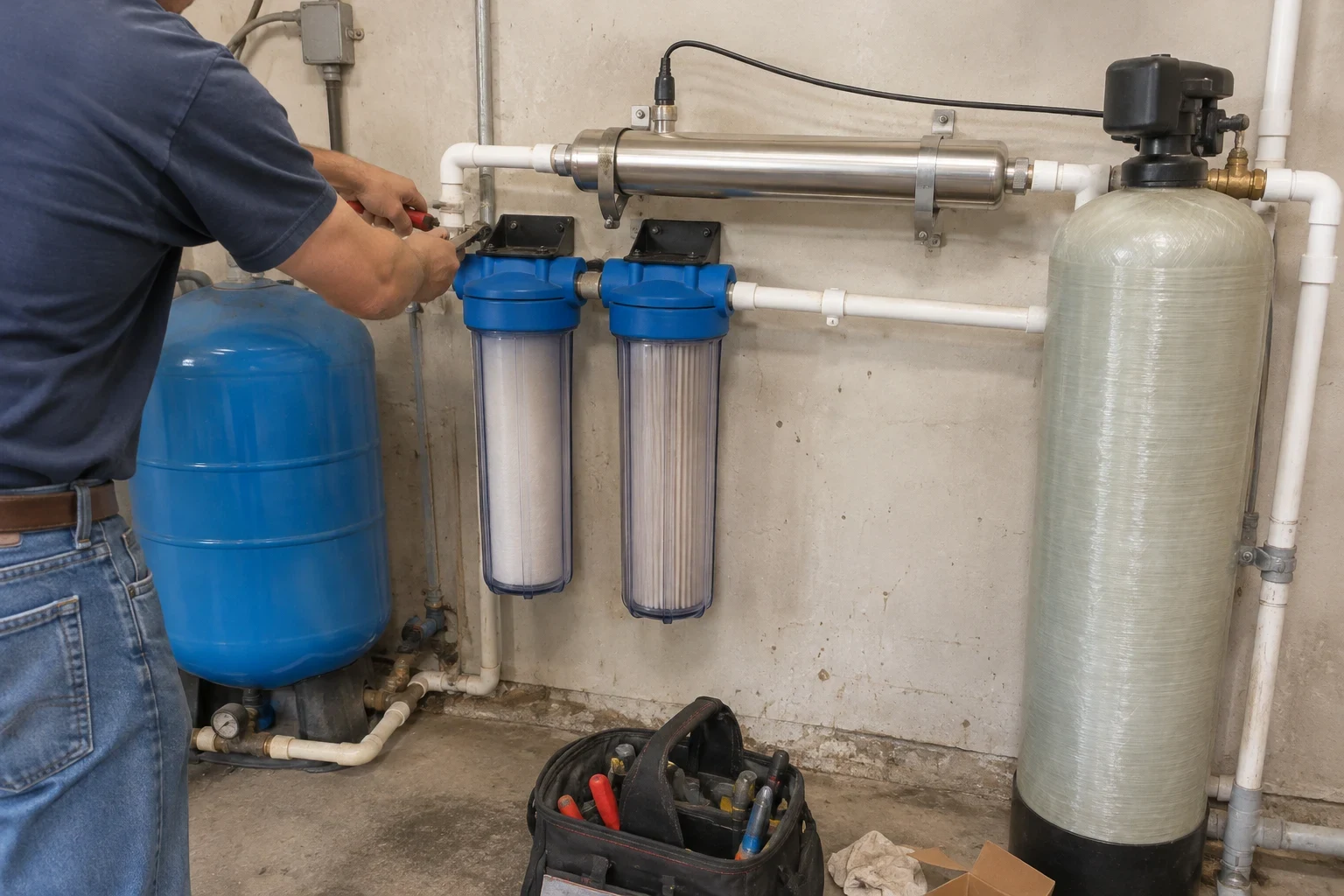
How we filter water from a private well
City water arrives already disinfected and monitored. Well water does not, so every stage has to be chosen for what is actually in your water. A system that ignores iron will foul its own carbon. One that skips sediment will scratch the quartz sleeve on a UV lamp and cut its output. Order matters as much as the parts.
That is why we never quote a well system from a phone description. We pull a sample, read the results with you, and design the stages in sequence: sediment first, then iron and sulfur, then hardness if the numbers call for it, then disinfection last, where the water is clearest.
Wells in the limestone country around Lakeway and Lago Vista often run hard, so we check calcium and magnesium along with iron and bacteria. You see the reasoning for each stage before anything goes on the wall.
What a well filtration install includes
- Lab-based sizing
- We size each tank to your water results and to the flow your well pump actually delivers. Backwashing media needs a minimum flow rate to lift and clean itself, so we measure gallons per minute before choosing the tank size.
- Sediment prefiltration
- A spin-down screen or pleated cartridge catches sand and scale before it reaches the media tanks or fixtures. We pick the micron rating so it traps grit without choking your pressure.
- Iron, sulfur and hardness stages
- Oxidizing media or air-injection tanks handle dissolved iron and the rotten-egg smell of hydrogen sulfide. Our Iron and Sulfur Removal page covers those systems in more detail, and a softener is added only when your hardness result supports it.
- UV disinfection
- The final stage is an ultraviolet lamp housed in a quartz sleeve, which inactivates bacteria as water flows past without adding any chemicals. The UV Water Purification page explains how lamp output and water clarity affect it.
- Bypass, drain and labeling
- Every system gets a bypass valve so water keeps running during service, a code-appropriate air gap on the backwash drain, and labeled stages so you know which cartridge is which.
Signs your well water needs filtration
Orange or brown stains
Rust-colored rings in toilets and on fixtures point to dissolved iron oxidizing once it hits air. Iron also coats valves and water heater elements over time.
A rotten-egg smell
Hydrogen sulfide gas from the aquifer or from sulfur bacteria in the well. It is often strongest on the hot side, where a magnesium anode rod can react with it.
Grit in aerators
Sand or fine silt clogging faucet screens and appliance inlet valves means sediment is getting past the pump. It wears washer and dishwasher valves faster than people expect.
White crust and spotted glass
Calcium and magnesium leave scale on shower glass and inside the water heater, which costs efficiency every heating cycle.
No bacteria test in the past year
Coliform gives no warning you can taste or smell in a glass. When a year or more has passed since your last bacteria test, or the last result was positive, plan on a disinfection stage.
How the install day runs
- 1
Free water test and walkthrough
We sample at the pressure tank before any existing equipment, check pump flow, and look at where the system can go and where the backwash can drain. You get the results explained in plain terms.
- 2
Written plan before work starts
You see each stage, why it is there and what it costs. We also tell you which rooms we will enter and how long the water will be off, so the household can plan around it.
- 3
Protecting the route
Drop cloths and boot covers go down inside. Outside, we lay boards or mats on the path to the well house so hoses and dollies do not rut the lawn or crush beds.
- 4
Install, flush and verify
We plumb in the stages with a bypass, program the control valve, run each tank through its first backwash, and sanitize the lines downstream. Then we test pressure and flow at your fixtures.
- 5
Handoff and cleanup
We walk you through the filter change schedule and bypass, haul away packaging and old parts, and leave the area as we found it.
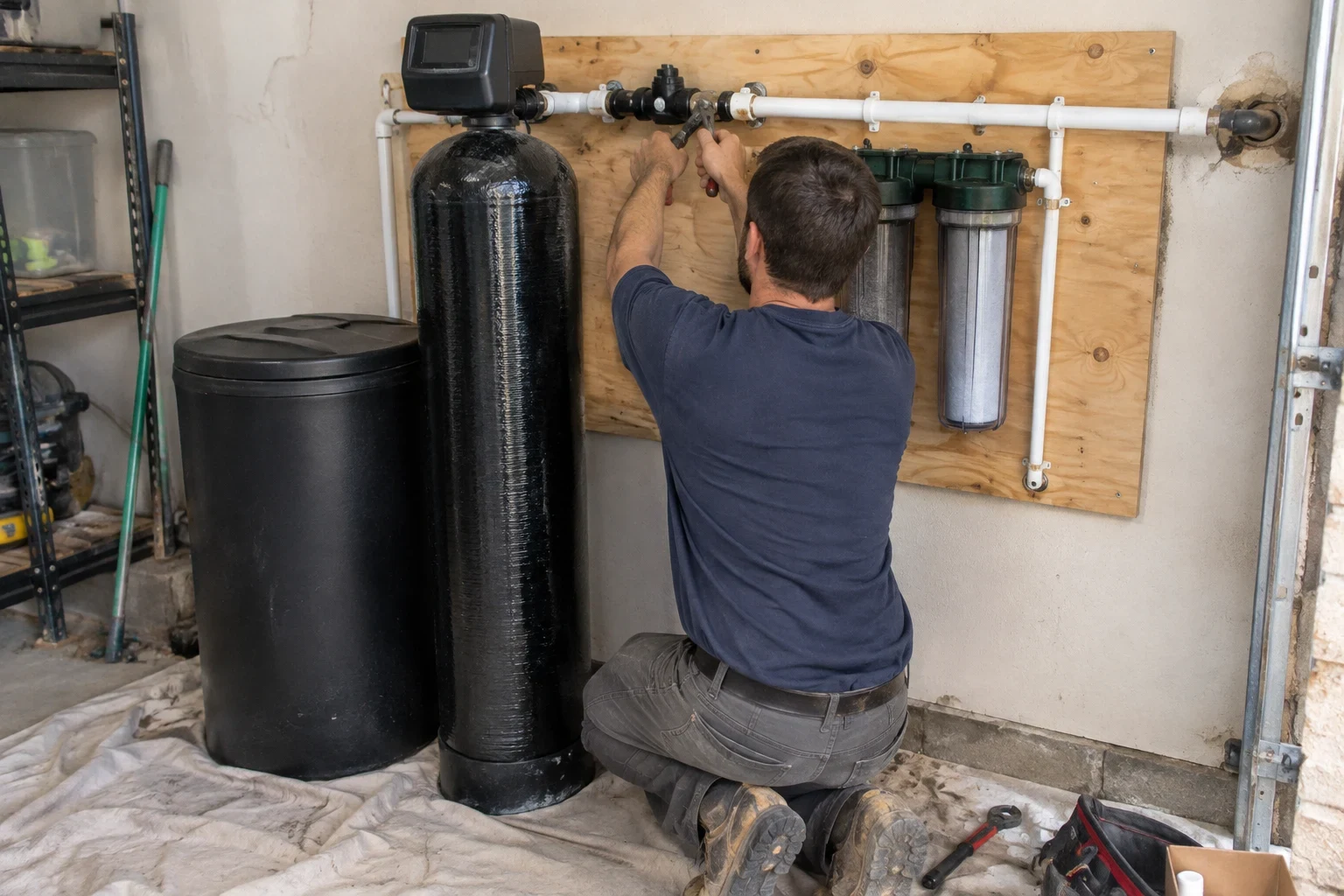
What moves the cost of a well system
Well systems vary more than city systems because the water itself varies from one well to the next. Your price comes from the test results and the site, and we write it out stage by stage. Installation is free, so the quote covers the equipment and any plumbing changes.
- Number of stages
- A well that only calls for sediment filtration and a UV lamp is a much smaller job than one that also needs an iron tank and a softener. Each added stage brings its own tank, valve and plumbing.
- Contaminant levels
- Higher iron or sulfur readings call for larger media tanks or air injection, which changes both the equipment and the drain requirements.
- Pump flow and tank sizing
- Low-yield wells sometimes need a different media or a retention tank so backwashing does not outrun the pump.
- Location and plumbing
- A well house with a drain and an outlet is simpler than a garage install that needs new lines, a drain run or an electrical circuit for UV.
Well water filtration questions
Something not covered here? (512) 710-0237
Why do I need a water test before you quote?
Because the right stages depend on what is in your water. Iron above a certain level will foul a carbon filter, and cloudy water reduces how well UV works. Testing first keeps you from paying for equipment you do not need or missing a stage you do.
Will a filtration system lower my water pressure?
Every stage adds some pressure drop, which is why we size tanks to your pump flow and choose cartridge ratings carefully. A properly sized system should not be noticeable at the shower. A clogged sediment cartridge is the usual cause of a sudden drop.
How much upkeep does a well system need?
The amount of sand and silt your well carries sets the sediment cartridge schedule, and most wells need a fresh one every few months. UV lamps get swapped once a year, and the quartz sleeve gets wiped clean at the same time. Backwashing media tanks mostly look after themselves, and we show you how to check each one.
Is installation really free?
Yes. Installation is free, and your quote covers the equipment and any plumbing or electrical changes your site needs. We list those separately so nothing is hidden.
Will you damage my yard getting to the well?
We plan the route during the walkthrough and lay mats or boards over turf and beds before carrying equipment. Indoors, floors get drop cloths and we wear boot covers. If anything needs to be moved, we ask first.
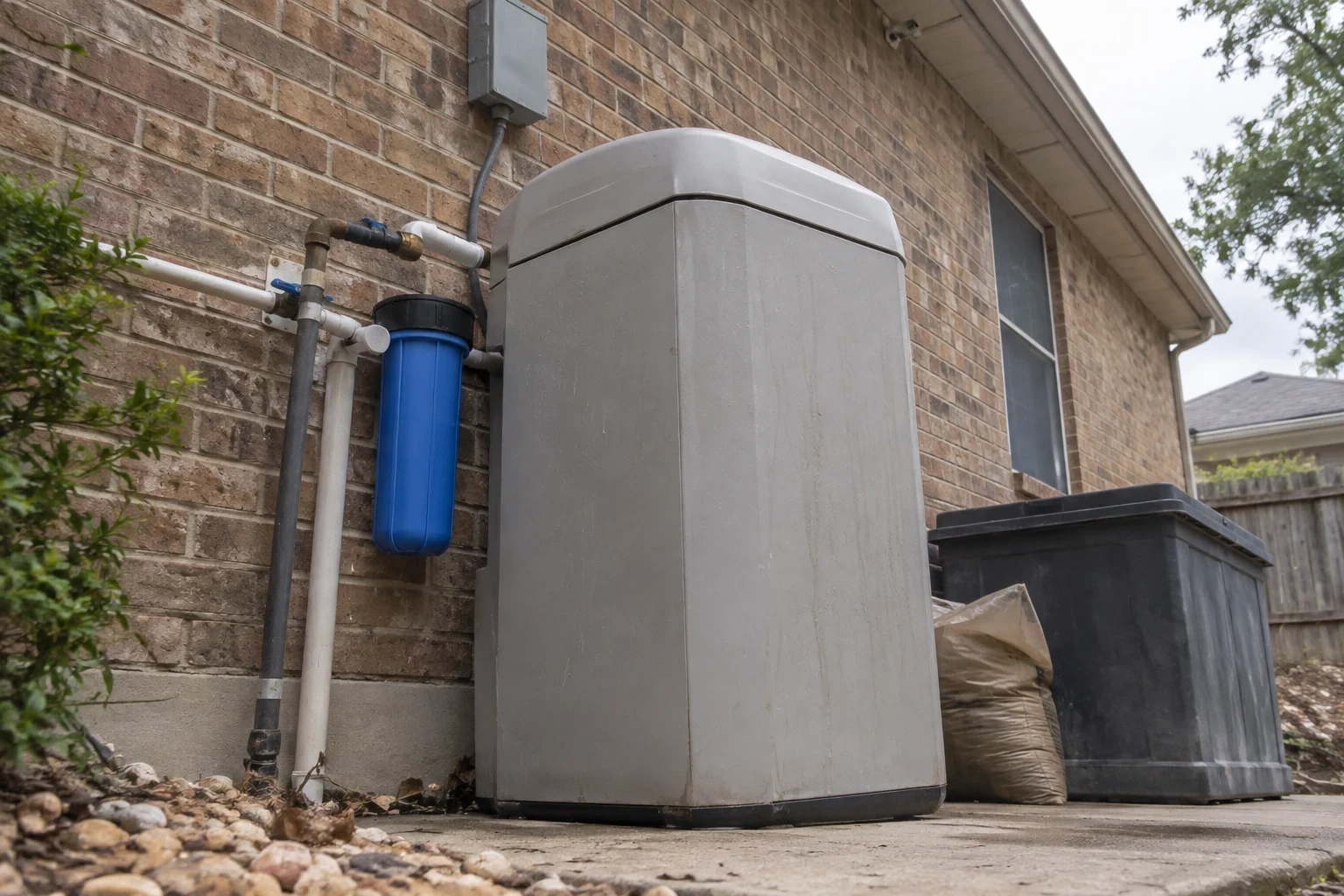
Find out what is in your well water
We will sample at your pressure tank, explain the results and tell you which stages your well actually needs. Then you decide.